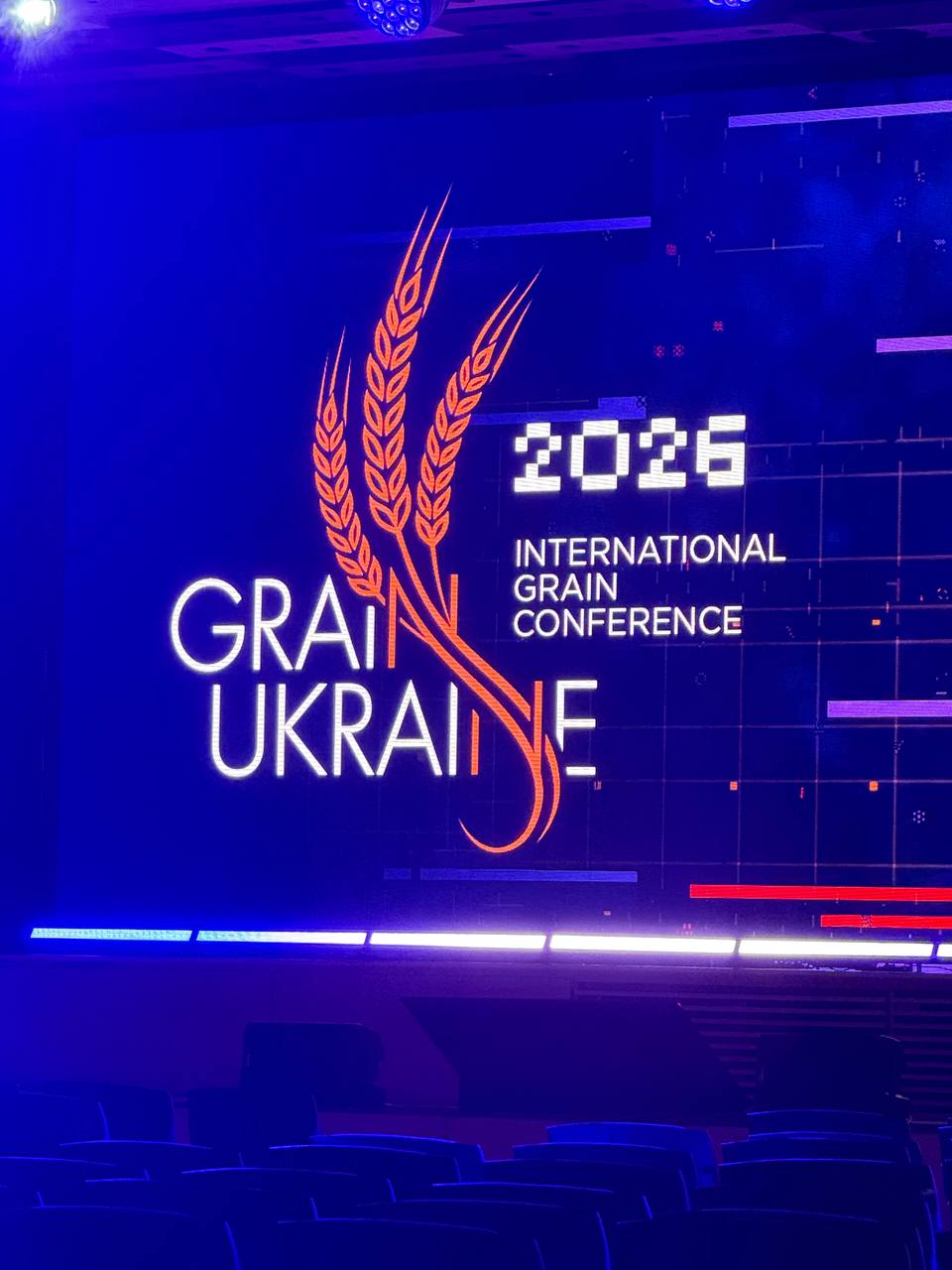
In early June, Kyiv hosted the international Grain Ukraine 2026 conference, which has become one of the leading platforms for discussions among agribusiness representatives, traders, investors, and policymakers. This year’s event was held under the theme “The New Grain Order” and focused on the challenges shaping the future of the global agricultural market.
The conference aimed to explore what the Ukrainian agricultural sector will look like over the coming decades and how the country can strengthen its position among the world’s leading agricultural exporters amid war, shifting trade routes, and growing global competition.
Key Speakers at Grain Ukraine 2026
Among the conference’s prominent speakers was Oleksii Sobolev, Ukraine’s Minister of Economy, Environment, and Agriculture. He focused on government policies supporting the agricultural sector, attracting investment, and promoting domestic processing rather than relying solely on raw commodity exports.
Another key participant was Yevhen Osypov, CEO of Kernel, Ukraine’s largest agribusiness company. In his presentations, he emphasized the need to modernize logistics infrastructure, expand export capabilities, and develop new markets for Ukrainian agricultural products.
Georg von Nolcken, CEO of Continental Farmers Group, addressed the prospects for international investment in Ukrainian agriculture. He stressed that despite the ongoing war, Ukraine remains an attractive destination for long-term investment due to its vast agricultural potential and highly professional farming sector.
A significant contribution came from Andriy Stavnitser, co-owner and CEO of the TIS Group. His remarks focused on the transformation of logistics routes, the development of port infrastructure, and the strategic role of Ukrainian seaports in maintaining grain exports.
Among the international speakers was Petr Krogman, owner of Agromino and President of the Czech-Ukrainian Chamber of Commerce. He shared his perspective on agribusiness development in Central and Eastern Europe and highlighted opportunities for cooperation between Ukrainian producers and European partners.
Main Topics of Discussion
The Future of the Global Grain Market
Participants discussed changes in the global grain trade landscape, increasing competition from Brazil and other exporting countries, and the impact of geopolitical factors on pricing, demand, and trade flows.
Logistics and Export Infrastructure
A dedicated panel focused on transportation and export logistics. Experts analyzed the effectiveness of Ukraine’s maritime export corridor, the role of the ports of Greater Odesa, the development of the Danube logistics cluster, and the investments required to strengthen the country’s export capacity.
Value-Added Production and Investment
One of the conference’s key messages was the need to move beyond exporting raw agricultural commodities. Speakers highlighted the importance of expanding processing industries, developing bioenergy and biomethane production, and attracting international capital to support long-term growth and competitiveness.
Key Takeaways for the Agricultural Sector
Grain Ukraine 2026 demonstrated that the future success of Ukrainian agriculture will depend not only on production volumes but also on efficient logistics, advanced processing capabilities, and the ability to attract investment. Participants agreed that Ukraine has all the prerequisites to remain one of the world’s leading agricultural players, provided it continues to invest in infrastructure, diversify export opportunities, and increase the production of higher-value agricultural products.